
Key Points:
- A major fire broke out at the historic Kehlsteinhaus (Eagle’s Nest) in southern Germany on Friday evening, triggering a massive emergency response.
- Emergency services were alerted shortly after 9:00 pm local time (19:00 GMT), finding the structure heavily engulfed upon arrival.
- German police suspect arson and have arrested a male motorcyclist encountered traveling away from the scene.
- Authorities have not yet confirmed whether the detained individual was directly involved in starting the blaze; investigations into the cause remain ongoing.
- No injuries have been reported, and preliminary findings indicate the building was empty when the fire erupted.
- Built between 1937 and 1938 at an altitude of 1,834 metres, the building served as a diplomatic teahouse for Adolf Hitler and Nazi officials.
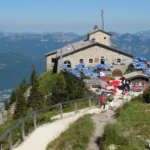
Berchtesgaden (Germany Latest News) October 24, 2026 – A dramatic fire engulfed the historic Kehlsteinhaus, widely known as the Eagle’s Nest, in the Bavarian Alps on Friday evening, prompting a large-scale emergency service response and a criminal arson investigation by German authorities. Police officers responding to the high-altitude blaze intercepted and detained a motorcyclist near the site, though investigators have yet to establish if the individual was directly connected to the outbreak of the fire.
What Happened During the Emergency Response at the Kehlsteinhaus?
Emergency services were alerted to the blaze shortly after 9:00 pm local time (19:00 GMT) on Friday evening. According to reporting published by the German newspaper BILD, emergency personnel rushed up the Kehlstein mountain in Bavaria to reach the remote location.
As reported by BILD, the structure was already fully engulfed in flames by the time the initial units of firefighters and police officers arrived at the scene. Approximately 200 emergency personnel joined the firefighting operation, battling the blaze late into the night under challenging mountain conditions.
Initial search and reconnaissance efforts indicated that no individuals were inside the complex at the time the fire erupted, and no injuries among civilians or first responders were reported.
Why Are Police Investigating the Incident as Arson?
A police spokesperson confirmed to BILD that law enforcement officials strongly suspect arson as the cause of the fire.
As detailed by news reports from BILD and The Times of India, police officers travelling towards the scene encountered a male motorcyclist driving in the opposite direction down the mountain road. Responding officers alerted the approaching fire service vehicles following behind them before stopping and arresting the motorcyclist.
Authorities have emphasised that while a suspect is in custody, it has not yet been definitively determined whether the arrested individual was involved in starting the fire. The precise cause of the fire and the full physical extent of the structural damage remain under active investigation by forensic police teams.
What Is the Historical Background of the Kehlsteinhaus?
The Kehlsteinhaus was constructed between 1937 and 1938 atop the Kehlstein mountain ridge at an elevation of 1,834 metres (6,017 feet) above sea level in southern Germany. Commissioned during the Nazi regime as a representative teahouse for Adolf Hitler, the structure was built near his broader Obersalzberg complex. It was designed to host visiting foreign dignitaries, diplomats, and high-ranking party officials for political receptions held away from public view.
Unlike many other structures associated with the Nazi leadership in the Berchtesgaden area, the Kehlsteinhaus survived Allied bombing raids during the Second World War largely unscathed. In 1952, ownership of the historic property was transferred to the Free State of Bavaria. In the post-war era, the building was leased out and converted into a public mountain restaurant and tourist destination. It also features historical educational displays documenting the site’s connection to the Nazi regime and the surrounding region’s wartime history.
How Will This Development Affect the Local Tourism Industry and Historical Preservation?
The destruction or severe damaging of the Kehlsteinhaus directly impacts multiple groups, primarily local tourism operators, historical preservationists, and regional authorities in Bavaria.
For the regional economy around Berchtesgaden, the site represents one of the area’s primary alpine landmarks, drawing international visitors and providing revenue for local transport services, hospitality businesses, and historical tour guides. A prolonged closure or structural loss will likely cause short-term disruption to local tourism revenues and seasonal employment linked to the mountain site.
For historical researchers and preservation authorities, the incident presents complex challenges regarding the conservation of controversial historical architecture. As one of the few surviving original structures from the Nazi era in Obersalzberg, state heritage authorities in Bavaria will face decisions regarding the feasibility, ethical considerations, and costs of restoring a site that functions simultaneously as a historical document, educational exhibit, and commercial venue.