Key Points
- A massive fire has almost completely destroyed the historic Kehlsteinhaus (Eagle’s Nest), built for Adolf Hitler, situated 1,834 metres high in the Bavarian Alps.
- Firefighters were alerted at approximately 9:15 p.m. on Friday after a fire alarm went off, but struggled to reach the remote cliffside building due to difficult terrain.
- Fire crews and emergency responders required heavy breathing apparatus to access the building and its immediate surroundings.
- Emergency personnel searched the premises and confirmed no one was inside the building; no injuries have been reported.
- Law enforcement officials detained a suspect shortly after the fire broke out, though criminal investigators have yet to confirm if the individual was involved in starting the blaze.
- Local tourism authorities and police noted that the building burned down almost completely, leaving it doubtful whether significant parts of the historic structure can be saved.
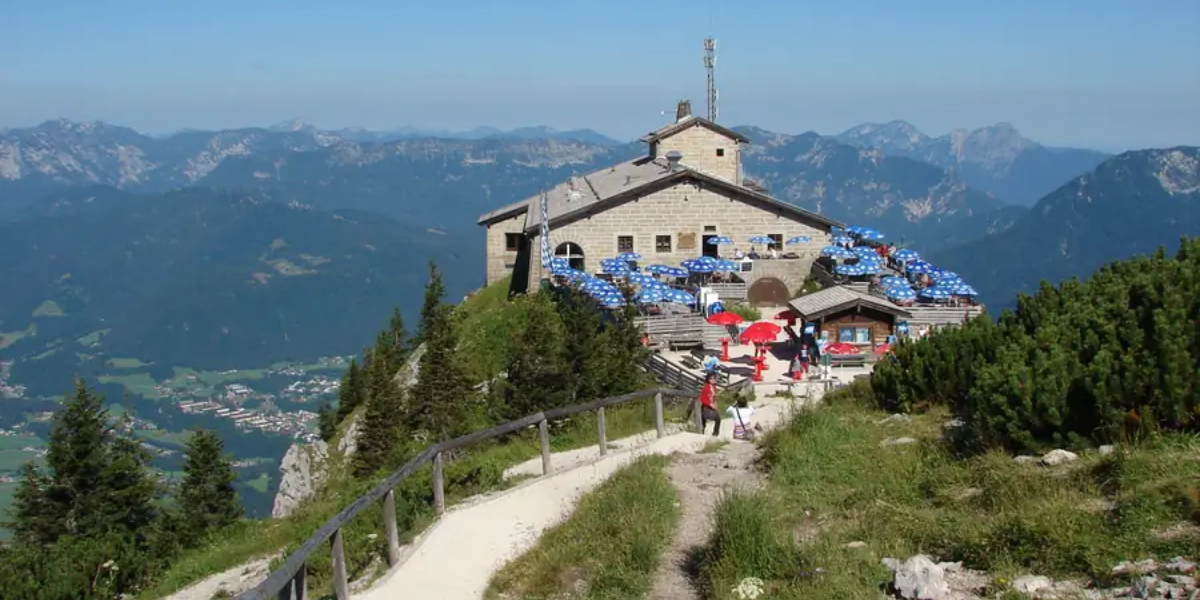
Berlin (Germany Latest News) October 24, 2026 – The historic Kehlsteinhaus, internationally known as the Eagle’s Nest and built as a mountain retreat for Adolf Hitler, has been almost completely destroyed in a devastating fire in Germany’s Bavarian Alps, with emergency operations continuing into Saturday morning as law enforcement officers detained a suspect in connection with the incident. Local tourism officials and regional police reported that the remote landmark sustained critical damage, leaving it unclear whether any substantial portion of the building can be salvaged. Emergency services confirmed that no individuals were inside the retreat at the time of the blaze and no injuries were sustained.
- Key Points
- What Caused the Fire Emergency at the Kehlsteinhaus?
- Who Has Been Detained in Connection with the Blaze?
- What Is the Extent of the Damage to the Historic Site?
- What Is the Historical Significance of the Eagle’s Nest?
- Background of the Kehlsteinhaus Development
- Prediction: How This Development Can Affect Stakeholders
What Caused the Fire Emergency at the Kehlsteinhaus?
As reported by the Associated Press, local police stated that a fire alarm at the remote building in the Berchtesgaden district, located in Germany’s south-eastern corner, was triggered at approximately 9:15 p.m. on Friday night.
Firefighters dispatched to the scene reported seeing heavy flames visible from a distance as they navigated the steep mountain road toward the cliffside complex, which sits 1,834 metres (6,017 feet) above sea level.
According to reporting by Agence France-Presse (AFP), emergency vehicles faced severe difficulties reaching the structure due to its isolated geography and narrow access routes, forcing fire crews to work through the night and into Saturday morning to extinguish the lingering flames. Because of dense smoke and hazardous conditions, the building and its surrounding grounds could only be accessed by personnel equipped with specialized respiratory protection equipment.
Who Has Been Detained in Connection with the Blaze?
As reported by BILD and covered by international media, law enforcement officers encountered a motorcyclist on the winding access road while responding to the emergency call.
A police spokesperson confirmed to BILD that officers stopped and detained the individual shortly after the fire broke out. Police confirmed in an official statement that a person came into the focus of investigators and was taken into custody, though authorities emphasized that it has yet to be determined whether the suspect had any direct involvement in starting the fire.
Police spokesperson Lisa Maier stated that criminal investigators are actively working to establish the cause of the fire and that further official updates would be released following initial forensic assessments.
What Is the Extent of the Damage to the Historic Site?
As reported by The Guardian through statements from police and news photography, the building suffered extensive structural destruction. A spokesperson for the local police department told BILD that the retreat is “damaged to a large extent” and noted that “the house is unlikely to be saved”.
Emergency service personnel conducted a thorough sweep of the site once initial fire suppression permitted entry. Authorities confirmed that no occupants were inside during the blaze, as the building was not open to visitors late Friday evening. Police subsequently cordoned off the single access road leading up the mountain to keep the public clear of the hazardous site.
What Is the Historical Significance of the Eagle’s Nest?
Completed in 1938, the Kehlsteinhaus was commissioned by Martin Bormann, Adolf Hitler’s private secretary, as a 50th birthday gift for the Nazi leader. Perched atop the Kehlstein mountain in the Obersalzberg ridge, the retreat was constructed using intricate stonework and engineered to be reached via a specialized 124-metre tunnel cut through solid rock, leading to a luxury brass elevator inside the mountain.
Although designed as a government reception lodge, Hitler visited the property infrequently due to his fear of heights and the mountain’s unpredictable weather. During World War II, the site escaped damage from Allied bombing raids that targeted other military installations in the Obersalzberg area. Following the war, the property was handed over to the Free State of Bavaria. Since 1952, the building has been leased to a charitable trust and operated as a mountain inn, restaurant, and educational exhibit maintained in cooperation with the Munich Institute for Contemporary History to document its origins and the regime of the Third Reich.
Background of the Kehlsteinhaus Development
Following the end of World War II, the Allied forces demolished most of the physical infrastructure associated with the Nazi regime in the Obersalzberg region—including Hitler’s primary residence, the Berghof—to prevent them from becoming pilgrimage sites for neo-Nazi sympathisers. However, the Kehlsteinhaus was preserved due to its architectural uniqueness and remote location.
In 1952, the Bavarian state government decided to repurpose the site into a public educational and tourist destination, transferring its management to the Berchtesgaden Regional Tourism Association. Over the decades, strict access controls were established: private vehicular traffic on the steep Kehlsteinstraße was banned, requiring visitors to access the summit strictly via specialized mountain buses and the historic rock elevator.
The site served a dual purpose in modern Germany. On one hand, it operated as an important economic driver for the Berchtesgaden tourist economy, attracting hundreds of thousands of international visitors annually to its restaurant and panoramic views. On the other hand, it functioned as an essential historic educational venue. Permanent documentation exhibits were established on-site to educate visitors about the history of the Third Reich, contextualising the building within the broader horrors of World War II and the Holocaust.
Prediction: How This Development Can Affect Stakeholders
The near-total destruction of the Kehlsteinhaus is anticipated to have immediate and long-term impacts across several key groups and sectors:
- Local Tourism and Regional Economy: The Berchtesgaden district relies heavily on international and domestic tourism. As one of the region’s primary heritage attractions, the loss or prolonged closure of the Kehlsteinhaus will likely result in a significant drop in visitor numbers, impacting local bus operators, hospitality businesses, hotels, and seasonal workers who depend on visitor traffic to the summit.
- Historians and Educational Institutions: The destruction of one of the few intact architectural structures dating to the Nazi era alters the landscape of historical preservation in Germany. Historians and institutes like the Institute for Contemporary History will lose a physical educational venue used to contextualise WWII history. Discussions among heritage boards will focus on whether to attempt a historic reconstruction or leave the ruins as a silent monument.
- Law Enforcement and Regional Security Authorities: The outcome of the ongoing criminal investigation into arson will dictate security policies for historical landmarks across Germany. If arson is formally proven, state authorities will likely face pressure to heighten surveillance, access controls, and structural fire protection systems at other politically sensitive or historic sites across the country.