Key Points
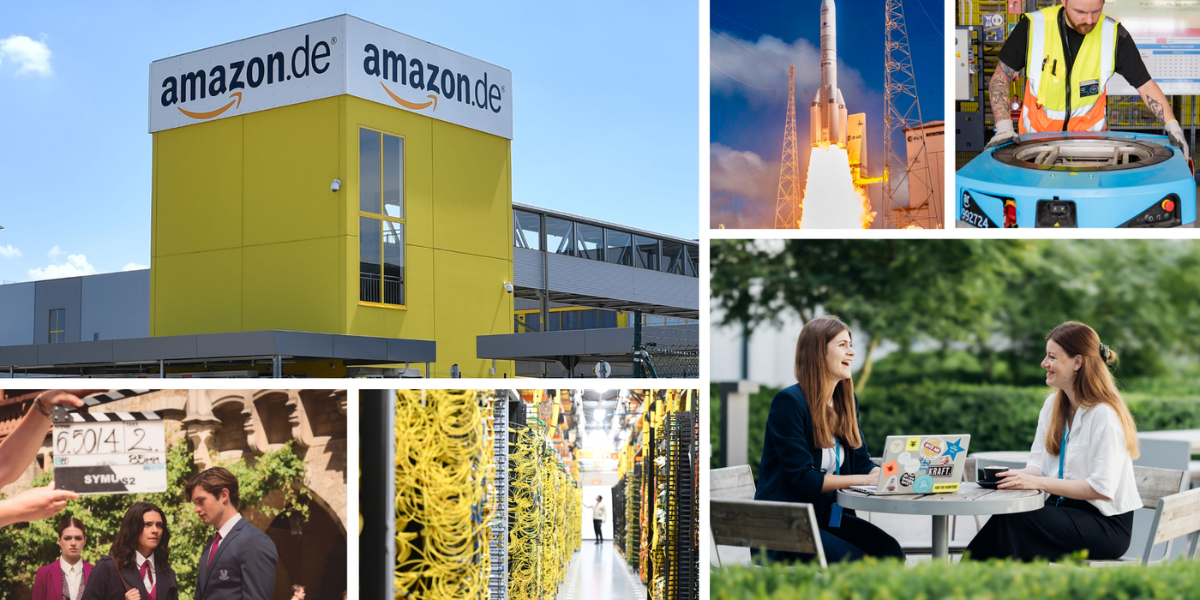
- Amazon has announced plans to invest more than €16 billion ($18 billion) across Germany in 2027 to boost artificial intelligence, cloud, logistics, satellite internet, and digital entertainment.
- A major portion of the spending—€4.8 billion—is designated for expanding the AWS Europe (Frankfurt) Region to meet rising demand for advanced cloud computing and AI services.
- Amazon is opening a second research facility in Berlin dedicated to robotics and artificial intelligence, doubling its research headcount in the capital.
- The investment expands low Earth orbit satellite coverage via Amazon Leo, which has secured 24 launches with European space provider Arianespace.
- Since 2010, Amazon has committed over €100 billion to Germany, where it currently maintains more than 40,000 permanent jobs.
Berlin (Germany Latest News) October 22, 2026 – Amazon has unveiled a massive commitment to invest more than €16 billion ($18 billion) in Germany throughout 2027, delivering a major injection into the nation’s digital economy, artificial intelligence development, logistics networks, and satellite communications infrastructure. Announced during the Federal Government’s Invest in Germany Summit in Berlin, this multi-billion euro package reinforces Germany’s status as one of Amazon’s primary global innovation hubs. The initiative builds upon the technology giant’s milestone of investing over €100 billion in the country since 2010, driving domestic technological advancement and permanent job creation.
- Key Points
- What are the core components of Amazon’s €16 billion commitment?
- How do executive and governmental leaders view this development?
- How will AWS expansion and AI research impact technical capabilities?
- What role does Amazon Leo play in European space collaboration?
- How is Amazon contributing to workforce development and digital skills?
- Background of the particular development
- Prediction: How this development can affect the German business community, tech sector, and workforce
What are the core components of Amazon’s €16 billion commitment?
As reported by official corporate statements and confirmed by company leadership at the Invest in Germany Summit in Berlin, the €16 billion investment strategy spans multiple economic and technical sectors. The enterprise initiative combines technological infrastructure development, research and development expansion, space logistics, local content production, and sustainability practices.
A central pillar of the funding involves a €4.8 billion allocation toward expanding the AWS Europe (Frankfurt) Region in 2027. This infrastructure expansion is tailored to address accelerating enterprise demand for cloud services, generative AI, and secure data storage options across Central Europe.
- Robotics Research: Establishing a second research laboratory for robotics and artificial intelligence in Berlin, effectively doubling Amazon’s research presence in the capital.
- Satellite Infrastructure: Expanding coverage for Amazon Leo, a low Earth orbit (LEO) satellite network designed to deliver broadband connectivity to unserved and underserved communities.
- Logistics & Distribution: Upgrading and opening modern logistics facilities to accelerate order fulfillment times across the nation.
- Media & Entertainment: Financing a major new slate of German-language original content for Prime Video aimed at international distribution.
- Sustainability & Water Stewardship: Advancing water management protocols and sustainable infrastructure build-outs to align with broader environmental standards.
How do executive and governmental leaders view this development?
As reported by political and corporate journalists attending the summit in Berlin, key leaders from both government and industry framed the multi-billion euro investment as a crucial validation of Germany’s industrial and digital potential.
Appearing alongside German Chancellor Friedrich Merz at the summit, David Zapolsky, Amazon’s chief global affairs and legal officer, stated:
“Germany is a hub of innovation and one of the most attractive investment opportunities in Europe. That is why we have invested more than €100 billion here since 2010, and why we plan to invest an additional €16 billion in 2027. We want German businesses, communities, and creators to have the infrastructure and tools they need to compete and grow.”
Highlighting the macroeconomic and technological implications for the country, Katherina Reiche, Federal Minister for Economic Affairs and Energy, stated:
“Amazon’s investment is a clear vote of confidence in Germany as a location for the future. High-performance data centers are the foundation of the digital economy. With the data wealth of our industry, we also have the potential to become a global leader in industrial AI. These are exactly the kinds of investments we need: they strengthen Germany’s position in international technology competition and create value and jobs in the process.”
Detailing the broader operational footprint across the federal republic, Rocco Bräuniger, Amazon Germany country manager, added:
“We have already created over 40,000 permanent jobs, built more than 100 sites, and invested more than €100 billion in Germany—and we are far from done. Customers expect us to keep innovating, and that is exactly what we will do: with faster logistics, cutting-edge AI, high-speed satellite internet, and German stories that captivate Prime Video audiences around the world.”
How will AWS expansion and AI research impact technical capabilities?
As reported by technology analyst media covering cloud computing developments, the €4.8 billion directed specifically into AWS infrastructure builds upon a decade-long presence in Hesse and surrounding regions. AWS has operated its Frankfurt region since October 2014 and launched the AWS European Sovereign Cloud in Germany, which became generally available in January 2026.
Emphasizing the enterprise requirement for reliable, sovereign compute resources, Stefan Höchbauer, vice president of AWS global sales for Germany and Europe Central, stated:
“In a fast-moving world, companies need infrastructure they can rely on—secure, available, and built to help them stay ahead. They need the broadest choice of services to meet their individual needs. That is exactly what AWS offers. We will keep investing so that German innovation keeps thriving. As part of the investments, €4.8 billion is planned to expand the AWS Europe (Frankfurt) Region through 2027.”
In parallel, the expansion of Amazon’s robotics footprint in Berlin creates highly specialized engineering positions. According to corporate announcements, the new Berlin research lab will develop human-machine collaboration systems aimed at increasing fulfillment accuracy and improving workplace safety. Career roles created by the facility include applied scientists, robotics hardware engineers, robotics software engineers, and robotics systems engineers.
| Initiative / Sector | Operational Target | Key Details & Milestones |
| AWS Cloud Expansion | €4.8 Billion | Expands Frankfurt region; builds on AWS Sovereign Cloud (launched Jan 2026). |
| Robotics & AI Lab | Berlin Research Hub | Second lab in Berlin; creates specialist hardware, software, and science roles. |
| Amazon Leo Satellite | National Coverage | 24 rocket launches secured with European launch provider Arianespace. |
| Workforce Education | Tech Skills & AI | Cloud Business Expert (IHK) certification & “Kiro for Students” agentic AI tool. |
What role does Amazon Leo play in European space collaboration?
As reported by aerospace industry correspondents, Amazon Leo—the low Earth orbit (LEO) satellite network designed to deliver satellite internet to unserved and remote regions—represents a significant driver for the European space economy.
To launch its satellite constellation, Amazon has secured 24 rocket launch reservations with European provider Arianespace. Analysis conducted by economic research firm Oxford Economics projects that Germany will experience the second-largest economic impact in Europe from the Amazon Leo program. This domestic impact is concentrated around key industrial aerospace suppliers, including ArianeGroup facilities located within Germany and critical component suppliers such as MT Aerospace.
How is Amazon contributing to workforce development and digital skills?
As reported by education and technology reporters, the physical and digital infrastructure rollout is paired with vocational training and education initiatives across Germany:
- IHK Apprenticeships: Since 2023, Amazon and Siemens have offered vocational apprenticeships certified by the German Chamber of Commerce and Industry (IHK) for IT and electronics technicians, based at data centers in Hesse and Brandenburg.
- Cloud Business Expert (IHK): Amazon and IHK established Germany’s first national cloud certification. Managed through the AWS Tech Alliance, this and related training programs have reached over 20,000 students in Germany since launching in December 2023.
- Kiro for Students: Amazon introduced free access to “Kiro”—a professional agentic AI development environment—for millions of students across 132 universities in 18 countries, including Germany, preparing graduates for AI-native software development roles.
Background of the particular development
The €16 billion pledge for 2027 represents the latest phase in Amazon’s systematic investment strategy across the Federal Republic of Germany. Since establishing its initial physical logistics network in the country in the late 1990s and launching the AWS Frankfurt cloud region in October 2014, Germany has served as Amazon’s largest commercial market in Europe. Over the past 16 years, the company has deployed more than €100 billion into physical facilities, network fulfillment, satellite contracts, and workforce compensation, establishing over 100 active sites and directly employing more than 40,000 permanent workers.
This latest investment arrives against the backdrop of increased European regulatory focus on data sovereignty and technological self-reliance. In response to strict European data residency requirements, Amazon made the AWS European Sovereign Cloud generally available in Germany in January 2026, providing local enterprises and public sector bodies with isolated cloud environments. Furthermore, Germany’s focus on digital transformation—championed by Federal Chancellor Friedrich Merz and Economic Affairs Minister Katherina Reiche—has encouraged heavy tech capital expenditures aimed at integrating artificial intelligence into the country’s manufacturing and industrial sectors.
Prediction: How this development can affect the German business community, tech sector, and workforce
The planned €16 billion investment is expected to generate direct and indirect effects across three key groups in Germany:
1. Enterprise Businesses and Industrial Manufacturers
German enterprises and Mittelstand manufacturers stand to gain significant compute capacity and localized AI tools. By expanding the Frankfurt AWS region and offering sovereign data infrastructure, local companies can deploy advanced industrial AI models without transmitting sensitive IP outside national borders. This capability allows traditional manufacturing and automotive firms to modernize production, automate supply chains, and compete with international tech rivals.
2. High-Tech Workers and Academia
The expansion of the second Berlin robotics lab and the introduction of agentic AI platforms like Kiro across 132 universities will directly shape the domestic talent pipeline. Specialized engineers, applied scientists, and IT technicians will see expanded employment opportunities within Germany, helping mitigate brain drain to non-European tech hubs. Additionally, standardized cloud certifications through the IHK will raise the baseline of certified digital skills across the broader workforce.
3. Regional Communities and Industrial Suppliers
Underserved rural areas will benefit from improved digital connectivity as Amazon Leo satellite broadband expands nationwide. Economically, the supplier ecosystem supporting space transport—such as MT Aerospace and ArianeGroup—will experience multi-year order backlogs driven by launch commitments. Simultaneously, regional construction, energy, and maintenance sectors in Brandenburg, Hesse, and Berlin will see sustained demand to support data center builds and logistics upgrades through 2027 and beyond.