
Key Points
- A forest fire that began on 27 June 2026 near Meuselwitz, Mumsdorf and Falkenhain in Thuringia has developed into a prolonged underground smouldering fire.
- Coal-bearing deposits beneath a former lignite mining site continue to burn despite the surface forest fire having been extinguished.
- Euronews reported on 30 September 2026 that experts believe the underground fire could take years to extinguish completely. The report was written by Franziska Müller.
- The affected area includes a former coal slurry basin associated with the Phönix open-cast mine and briquette production.
- Emergency services have widened the surrounding firebreak by up to 50 metres, installed sprinklers and are using drones for daily monitoring.
- Water-bombing helicopters have limited effectiveness because they can reach only the surface while the main fire is underground.
- Authorities plan to use several hundred thousand cubic metres of water, construct two pipelines over four kilometres and build a well before flooding the site.
- LMBV management spokesperson Bernd Sablotny said flooding is planned by January 2027 at the latest.
- Residents have reported respiratory irritation and unpleasant odours, while authorities continue monitoring carbon monoxide, oxygen, carbon dioxide, methane and hydrogen sulphide.
- Officials currently describe air-quality measurements as unremarkable and say no impact on groundwater is expected.
- The suspected original cause was contact between a high-voltage power line and a tree during a period of extreme summer heat, although the investigation has not reached a final conclusion.
- The incident highlights the continuing environmental and safety challenges associated with former lignite-mining sites in eastern Germany.
Germany Latest News (GLN) October 1, 2026 – A forest fire that began in late June near Meuselwitz in Thuringia has developed into an underground coal fire that remains active three months later, with authorities preparing a large-scale operation involving hundreds of thousands of cubic metres of water. According to Franziska Müller of Euronews, the fire is burning in coal-bearing deposits left behind by former lignite mining, and experts now believe complete extinguishing could take years.
- Key Points
- Why has the fire continued underground for three months?
- What measures are being used to stop the fire from spreading?
- How will authorities attempt to extinguish the underground fire?
- Why have helicopters not extinguished the fire?
- What are local residents experiencing?
- What is known about the suspected cause of the original forest fire?
- How did former lignite mining shape the current fire?
- What does the incident reveal about former mining sites?
- What is the current position on groundwater and environmental safety?
- What happens next at the Meuselwitz fire site?
- What is the background to lignite mining in Altenburger Land?
- How could the underground fire affect local residents in the coming months?
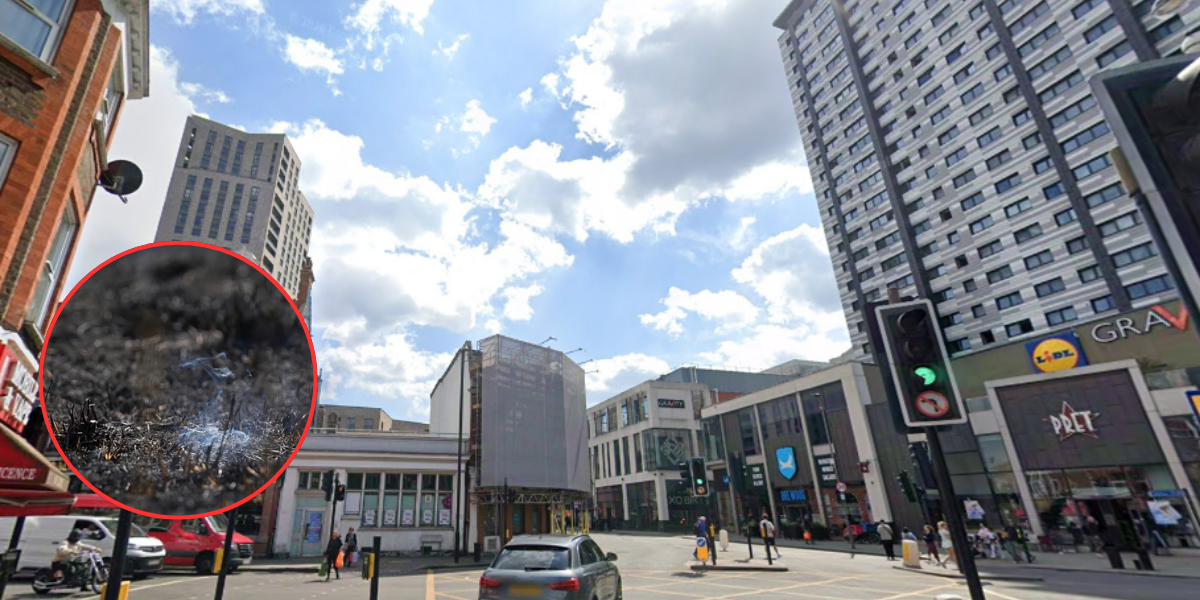
The surface flames have largely disappeared, but smoke continues to emerge from the ground as coal-rich material beneath the former mining area continues to smoulder. The unusual nature of the fire has made conventional firefighting methods difficult, with emergency services concentrating first on preventing the blaze from reaching surrounding woodland and meadow areas.
The fire began on 27 June between Meuselwitz, Mumsdorf and Falkenhain. Firefighters initially responded to what appeared to be a forest fire. The surface blaze was brought under control, but the fire subsequently reached a former coal slurry basin and ignited deposits beneath the surface.
The continuing underground combustion has transformed the incident from a conventional forest-fire response into a long-term environmental and safety operation.
Why has the fire continued underground for three months?
The central difficulty is the type of fire involved. A smouldering fire does not necessarily produce the visible flames associated with a conventional surface blaze. Instead, combustible material can glow and burn slowly where oxygen supplies are limited.
According to Euronews’ Franziska Müller, this means an underground fire can remain active for a prolonged period and can be difficult to locate and extinguish completely.
At the Meuselwitz site, the material involved is connected to the area’s former lignite-mining activity. Coal-bearing deposits remain beneath the ground, providing combustible material that can continue to sustain the fire.
The former coal slurry basin is particularly significant. Coal slurry consists of water, coal dust and coal particles produced during coal processing. Over decades, this material was deposited in the basin, where the solid particles accumulated.
Because the fire is located below the surface, applying water from above does not necessarily reach the active combustion zone. This has limited the usefulness of some conventional firefighting techniques.
What measures are being used to stop the fire from spreading?
The immediate priority remains containment rather than rapid extinguishment.
According to the Euronews report, the firebreak surrounding the affected area has been widened by as much as 50 metres. Sprinkler systems are being used to irrigate the perimeter, while drones fly over the area every day to monitor developments.
These measures are designed to prevent the underground fire and any associated surface effects from spreading into neighbouring woodland and meadow areas.
The authorities have also established a longer-term plan. The first stage involves dampening the surface of the coal slurry basin. This is intended to reduce smoke and unpleasant odours while longer-term engineering measures are prepared.
The planned approach also includes placing a layer of soil approximately two metres thick over the affected area. The purpose is to restrict the oxygen supply reaching the burning material.
However, the authorities’ most extensive planned measure is flooding.
How will authorities attempt to extinguish the underground fire?
The planned flooding operation will require several hundred thousand cubic metres of water, according to the report by Franziska Müller for Euronews. The water is expected to be taken from the Zipsendorf residual pit.
Before the flooding can begin, infrastructure must be constructed to transport the water to the affected area.
Two pipelines covering approximately four kilometres are planned, alongside construction of a well. According to the timetable outlined by LMBV management spokesperson Bernd Sablotny, the projects are expected to be completed by November.
Flooding of the fire site is planned for January 2027 at the latest.
Sablotny told an event in Meuselwitz that the organisation was working to implement the measures as quickly as possible. He also addressed concerns about administrative delays, saying the response should not be slowed by lengthy approval procedures.
Representatives of the responsible authorities also responded to concerns raised by local residents during a citizens’ dialogue.
The planned pipeline route includes a protected nature area. However, the municipality of Elsteraue said the construction can proceed because the work is intended to protect the population.
Why have helicopters not extinguished the fire?
Water-bombing helicopters have played a limited role because the primary fire is beneath the surface.
A helicopter can drop water over the affected area, but the water largely acts on the ground surface. It does not provide the same direct access to underground coal deposits as an engineered flooding or covering operation.
Euronews reported that the authorities had therefore moved towards a multi-month extinguishing and safety plan rather than relying on aerial firefighting.
The difference between this incident and a conventional forest fire is central to understanding the prolonged response. A surface fire can often be attacked directly with water, firebreaks and aerial resources. A subsurface smouldering fire presents a different problem because the burning material can remain concealed.
The response therefore combines containment, monitoring, surface dampening, soil covering and eventually flooding.
What are local residents experiencing?
The continuing fire has created concerns among residents in communities surrounding the affected site.
According to Euronews, people have complained of respiratory irritation and unpleasant smells. The effects can vary according to wind strength and direction, meaning different communities may experience the smoke and odour at different times.
Air monitoring has consequently become an important part of the response.
The town of Meuselwitz has been required to commission external experts to carry out a measurement programme, according to the Burgenland district cited by Euronews.
The monitoring programme is examining several gases, including carbon monoxide, oxygen, carbon dioxide, methane and hydrogen sulphide.
The purpose is to establish whether emissions from the smouldering fire are creating a risk to people living nearby.
At present, the LMBV has described the measurements as “unremarkable”. The Burgenland district has also reported no abnormalities so far.
Air quality is being monitored not only around the immediate fire zone but also in other municipalities, including Elsteraue.
The authorities have said that monitoring will continue while the fire remains active.
What is known about the suspected cause of the original forest fire?
The original forest fire began on 27 June, but investigators have not yet issued a final confirmation of its cause.
According to initial findings reported by Euronews, a high-voltage power line may have come into contact with a tree. The theory is that unusually high temperatures caused the line to sag more than normal, bringing it into contact with vegetation and potentially starting the fire.
The timing coincided with a period of significant summer heat in Germany. Temperatures above 40C were recorded in several parts of the country during the summer.
The fire then spread from the woodland to the former mining area and eventually reached coal-bearing deposits beneath the surface.
However, the exact circumstances remain subject to investigation. The suspected mechanism should therefore be distinguished from a confirmed finding.
How did former lignite mining shape the current fire?
The area’s industrial history is an important part of the present situation.
The affected location is associated with the former Phönix open-cast mine, where lignite was extracted as part of a wider mining complex in the Altenburger Land.
The lignite field was divided into six open-cast operations that entered service shortly after 1900. Mining operations were subsequently worked out during the middle of the 20th century.
After mining ended, several residual pits were created, including Rusendorfer See, Prößdorfer See and the Zipsendorf residual pit.
Lignite extraction in the Altenburger Land was discontinued during the 1970s. However, industrial activity connected to briquette production and power generation continued in parts of the area until 1990/91.
The coal slurry basin at the centre of the current fire was largely created during the operation of the Phönix briquette plant.
According to an LMBV statement cited in the Euronews report, wet briquette production generated substantial quantities of coal slurry.
That historic industrial material has now become part of the challenge facing emergency services and mining authorities.
What does the incident reveal about former mining sites?
The incident demonstrates how the legacy of former lignite mining can affect land management decades after extraction has ended.
The immediate fire began as a forest fire, but the subsequent spread into coal-bearing material changed both the nature and duration of the emergency response.
The presence of old mining infrastructure and deposited coal material means that extinguishing the fire cannot be treated solely as a conventional wildfire operation.
The LMBV, which is responsible for managing the consequences of former mining activity in the region, is consequently involved in the long-term response.
The authorities must balance fire containment with environmental monitoring, infrastructure construction, water management and public safety.
The planned four-kilometre pipeline and large-scale flooding operation illustrate the engineering requirements created by the underground nature of the fire.
What is the current position on groundwater and environmental safety?
Authorities have said that no impact on groundwater is expected from the planned measures.
The proposed pipeline construction through a protected nature area has also been addressed by the municipality of Elsteraue. The municipality has emphasised that the work is intended to safeguard the population.
At the same time, environmental monitoring remains necessary because the fire involves coal-bearing material and produces smoke and gases.
The continuing measurements of carbon monoxide, carbon dioxide, methane and hydrogen sulphide are intended to identify any changes in air quality.
As reported by Euronews and Franziska Müller, the measurements available at the time of publication had not indicated abnormalities.
This distinction is important because monitoring results represent measurements taken during the ongoing incident rather than a declaration that all future risks have been eliminated.
What happens next at the Meuselwitz fire site?
The authorities’ timetable points to a response extending into 2027.
In the immediate term, surface dampening and fire containment will continue. The perimeter will remain monitored, and emergency services will continue efforts to prevent the fire from spreading.
The planned pipelines and well are expected to be completed by November. Flooding is then planned for no later than January 2027.
The objective is to reduce the fire’s access to oxygen and ultimately extinguish the underground combustion.
Until those measures are completed, however, the underground fire remains active.
The authorities must therefore continue managing the site while preparing the infrastructure needed for the larger intervention.
What is the background to lignite mining in Altenburger Land?
Lignite was historically an important part of industrial activity in the Altenburger Land area.
The Phönix open-cast mine formed part of a wider network of lignite operations that developed in the early 20th century. Mining changed the landscape through the excavation of open-cast workings and the creation of residual pits after extraction ended.
Industrial activity continued beyond the formal end of lignite extraction, with briquette plants and power stations operating in the region into the period around German reunification.
The coal slurry basin involved in the current fire is directly connected with this industrial history. Material produced through wet briquette production accumulated in the basin over many years.
The present emergency is therefore linked to both a recent wildfire and the physical legacy of earlier coal production. Euronews’ account identifies the former lignite operation and coal slurry deposits as central factors in explaining why the fire has proved so difficult to extinguish.
How could the underground fire affect local residents in the coming months?
For residents, the immediate implications are likely to centre on continued monitoring, smoke and odour management and the timetable for the planned extinguishing operation.
The reported complaints of respiratory irritation and unpleasant smells mean that air-quality measurements will remain an important part of the response.
Wind conditions can influence where smoke and odours are experienced, making monitoring across several nearby communities relevant.
The planned flooding operation could mark a significant change in the response, but it requires substantial infrastructure and water resources before it can begin.
Based on the timetable given by LMBV management, the next major stages are expected to involve completion of the water infrastructure by November and flooding by January 2027 at the latest.
The duration of the underground combustion remains uncertain. Authorities are preparing for a prolonged operation, while experts cited in the reporting have indicated that complete extinguishment could take years.
For local residents, therefore, the development is likely to remain a matter of environmental monitoring and public-safety management rather than a short-term firefighting incident. The available air-quality measurements have so far been described as unremarkable, but monitoring and containment measures are continuing while the authorities prepare the larger intervention.